

Understanding Feng Shui & The Best Flooring Directions for Your Home
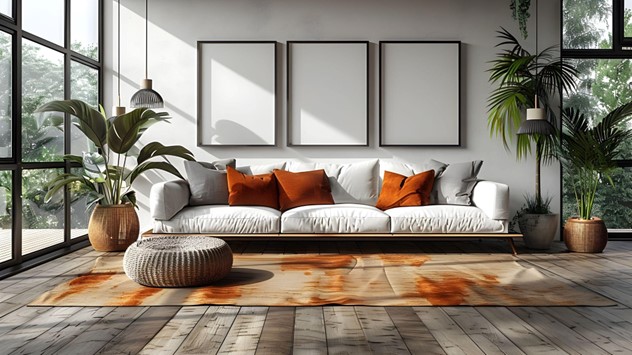
Feng Shui is an ancient Chinese philosophy that focuses on the flow of energy in a space – and everything, including the direction of your flooring, can influence that energy.
Feng Shui Basics
What is Feng Shui?
The first question most people have is ‘what is Feng Shui?’ Feng Shui is a philosophy that dates back to ancient China. It focuses on the way objects are arranged within a space and how that arrangement harmonises with the flow of natural energy, also known as chi.
The Five Elements in Feng Shui
There are five elements in Feng Shui: earth, fire, metal, water and wood. Earth is thought to have a stabilising influence, wood promotes growth, water is associated with wisdom and stillness, fire is linked to transformation, and metal is connected to energy and efficiency.
The Importance of Direction in Feng Shui
In Feng Shui, the direction of your home influences the flow of energy, and certain directions are linked to particular elements. For example, rooms facing south and east are best suited to wooden furnishings, while west and north-facing rooms are linked to metal.
The Best Flooring Directions for Your Home
When it comes to Feng Shui flooring direction, each room requires a particular direction. These requirements depend on the shape of the room. Most rooms, such as living rooms and bedrooms, are rectangular, so it’s best to lay flooring planks from north to south.
Choosing the Right Flooring Material
The Impact of Flooring Materials on Feng Shui
Different flooring materials can affect the energy flow in the home. For example, wood promotes growth, so it’s a good idea to align the grain towards a part of the house that you consider important. Stone floors, meanwhile, are linked to a sense of calm and stability.
Suitable Flooring Materials for Different Directions
As mentioned, stone can bring a sense of stability, but for most directions, wood is the best flooring material. Wood is associated with growth and energy, so it creates a positive atmosphere. Regardless of the direction of the room, the wood grain can be aligned towards a significant part of the house, sending the flow of energy in that direction.
Avoiding Unfavourable Flooring Materials
Natural materials such as wood are best for Feng Shui. There are also some materials to avoid in certain rooms – for example, you should never place carpet in the kitchen, as it disrupts the energy flow.
Feng Shui Tips for Floor Placement
The Importance of Entrance Placement
Your home’s entrance is where energy flows into the home. This means it should be free of clutter and obstructions, and should feature elements associated with its direction. For example, a south-facing entryway needs wooden flooring.
Avoiding Obstructions on the Floor
Obstructions can disrupt or block the energy flow, so the floor should always be kept free of clutter.
Balancing Yin and Yang with Flooring
One issue to resolve when answering the question of ‘what is Feng Shui?’ is how to balance Yin and Yang. Yin and Yang are opposite energies that must be brought into harmony. Flooring can help to balance these energies. For example, wooden flooring can encourage growth energy while also keeping the room calm and centred.
Frequently Asked Questions
Q. Which direction should my flooring run?
A. Flooring should run in the direction of a significant room in the house.
Q. What is the best flooring for Feng Shui?
A. Wood and stone are definitely the best floorings for Feng Shui.
Q. Should flooring be in the same direction throughout the house?
A. No, flooring direction depends on the direction of the room.
Q. Which direction of flooring makes a room look bigger?
A. To make a room look bigger, flooring should be laid lengthways.
Interested in flooring that promotes Feng Shui in your home? Contact us today.