

Measuring Stairs For Carpet Made Easy
If you’re planning to have your stairs carpeted, accuracy is essential. It’s important to know how to measure stairs for carpet in order to ensure the stairs are completely covered, as well as to avoid the expense of excess carpet material.
If you’re planning to have your stairs carpeted and want to know how to measure them, you’ve come to the right place. In this guide, we’ll walk you through how stairs are measured for carpet, including how different types of staircase are measured and potential problems that might occur.
How to Measure Stairs for Carpet
There are three basic steps involved in measuring stairs for carpet: gathering the right tools to take the measurements, measuring the landing, and finally measuring the stairs. Let’s take a more detailed look at the process.
What You’ll Need for Stair Measurements
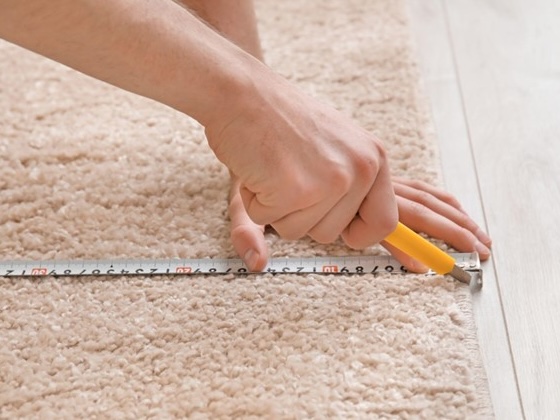
When taking stair measurements, a number of tools are required. A tape measure is essential for working out the tread, width and height of the stairs, and a pen, paper and a calculator are also needed to keep track of the measurements. For a curved or angled staircase, a special tool called a stair gauge is required to work around the angles.
Start by Measuring the Landing
Once the tools are ready, the next step is to measure the landing. The first step is usually to draw a floor plan, so that the place where the stairs come down from the landing can be marked. After that, the landing’s width and each of its sides are measured – including into the doorways, if there are any. It’s also necessary to include the top step in the measurements. The tape measure must go over the nose of the step and down the tread.
Measure the Stairs
The final step is to measure the stairs. There are four measurements that must be taken:
- Tread: The depth of each step is measured by running the tape measure from the edge of the stair to the riser – in other words, from front to back.
- Riser: The tape measure runs vertically, from one riser to the next.
- Consistency check: Stairs may not all be the same size – particularly on a curved or angled staircase – so it’s advisable to measure several steps.
- Total carpet needed: To work out how much carpet is needed, the number of steps should be multiplied by the riser and tread measurements.
How to Measure Stairs with a Turn for Carpet
L-shaped, U-shaped and spiral staircases need to be measured differently. As mentioned before, a stair gauge might be required to measure the extra angles and turns accurately. On spiral stairs, or any larger or smaller steps on a U- or L-shaped staircase, the tread and riser should also be measured, as well as the width, at the step’s widest point.
Things to Remember When Measuring Stairs for Carpet
There are a few pitfalls to avoid when measuring stairs for carpet:
- Accuracy: Always double check the measurements. Inaccurate measurements can lead to you having either too much or too little carpet.
- Extra material: You don’t want to run out of material if errors occur. We recommend ordering slightly more carpet than you need to account for this.
- Patterned carpets: This is another reason you might require extra material – it will help you to align the pattern.
- Stair safety: When measuring, there should be enough room on the stairs for people to use them. Tools should not be left on the stairs, where they could be tripped over. Loose carpet should not be unattended on the stairs, as it could be a hazard.
Frequently Asked Questions
- Q: How do you measure stairs for carpet fitting?
- A: Measure the tread and riser. Remember to do a consistency check.
- Q: How much carpet do I need for 13 stairs?
- A: Each staircase is different. Measure the tread and riser to work out how much carpet you need.
- Q: What is the formula for carpeting stairs?
- A: (Tread width + riser height + 5 cm) x number of stairs
- Q: How to measure for a staircase in the UK?
- A: Measure the landing, then the stairs.
Looking to have your stairs carpeted? Contact us here at The Flooring Group today.