

How to Repair Swollen Laminate Flooring Without Replacing It
Laminate flooring has long been a popular choice of flooring for UK homes, due to such qualities as its affordability, ease of installation, and durability.
However, one issue that can arise with laminate flooring is its susceptibility to swelling, particularly when it is exposed to excess moisture.
While laminate flooring may sometimes need to be replaced if the damage is severe, minor swelling can often be addressed with simple steps to restore its appearance and function.
If you’re wondering how to repair swollen laminate flooring without replacing it, this guide will walk you through the process.
Common Causes of Swollen Laminate Flooring
It is typically excess moisture that causes laminate flooring to swell. When water is allowed to get into the seams of the flooring, the MDF or HDF core can swell and expand.
Your own home’s laminate flooring may have become swollen due to the following circumstances:
- Spillage or leakage: such accidental or unexpected events can lead to water quickly penetrating the laminate flooring surface. This, in turn, can cause swelling to occur.
- Water damage from flooding: if flood water comes into contact with a laminate floor, swelling from the subsequent damage can be an unfortunate result.
- High humidity: moisture can accumulate in laminate flooring almost unnoticed if the humidity in that part of the property is high.
- Incorrect installation: if the laminate flooring wasn’t fitted correctly, gaps and spaces may have been left behind, allowing water to easily seep into the floor.
Identifying and addressing the cause of moisture is essential to prevent further damage and ensure a successful repair.
General Guidance for Repairing Swollen Laminate Flooring
Let’s presume that the swelling in your laminate flooring is relatively minor; you have started to notice bubbles and swelling in the laminate, but there isn’t yet significant damage to the flooring.
If this sounds like the current situation with your laminate flooring, there’s a good chance that you won’t need to replace the entire floor.
Below, then, is our rundown of how to repair swollen laminate flooring without replacing it:
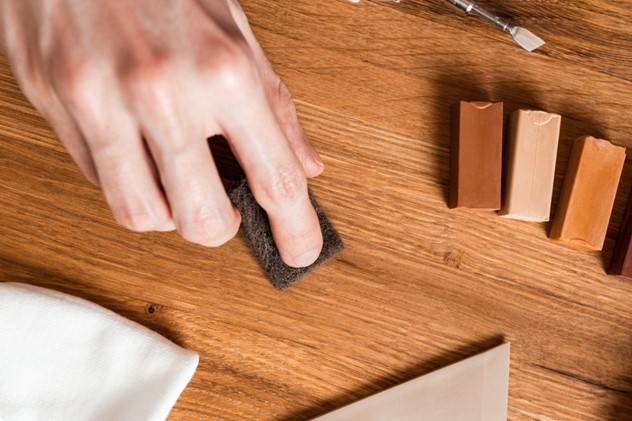
- Use wood glue or caulk to fill any expansion gaps: if there are any gaps between the laminate flooring planks, only a small amount of wood glue or caulk is needed to provide a barrier against water seeping into the seams. This will help prevent any existing damage from getting worse.
- Bursting minor bubbles to remove them: this involves placing a damp cloth over the bubble and using a knife to cut a slit in the area. Then, wood glue needs to be applied to the slit, before the veneer is pressed down using a weight. The application of this weight overnight will help ensure great results.
- Sanding down high spots that heavy objects might have caused: fine-grit sandpaper can be used here. However, great care needs to be taken to avoid sanding down too much, given the scope for further damage to be caused to the flooring.
- Cleaning and polishing the laminated surface to achieve a uniform look: once any damage to the flooring has been repaired, it will be time to clean and polish the surface, using a laminate floor cleaner and a microfibre mop. This will help bring back the floor’s original appearance, in addition to shielding it from future wear and tear.
To learn more about how our professionals can carry out these repair processes to the highest standards for your laminate flooring, please contact The Flooring Group today.
Preventing Future Swelling
Here are a few ways to keep your laminate flooring looking its best after repair. Regular care and maintenance will greatly support your efforts to prevent future swelling:
- Do everything you can to avoid fresh sources of moisture in the room: this may, of course, be easier said than done! But if there are steps that you can take to reduce humidity levels in the room to between 30% and 50% to guard against future moisture buildup – such as investing in a dehumidifier – this is the time to do it. Also, make sure you immediately clean up any new spills.
- Leave an expansion gap around the floor’s edges: leaving a small gap between the flooring and the walls will give the material space to expand and contract.
- Avoid leaving heavy objects on top of the floor for long periods: this will help ensure fresh high spots don’t appear following the repair of your laminate flooring.
Conclusion: Restoring Your Laminate Flooring with Simple Steps
Repairing swollen laminate flooring can be a straightforward process when the damage is minor. With the right tools and methods, you can restore your floor’s appearance and function without the need for costly replacements. By maintaining your laminate flooring carefully and addressing issues promptly, you can enjoy a beautiful, durable floor for years to come.
If you’re looking for advice on maintaining your flooring or want to explore our sanding and sealing services, contact The Flooring Group today.
Frequently Asked Questions
Q: Can you flatten the swollen laminate flooring?
A: Yes, it is possible to flatten swollen laminate flooring by drying it out and applying weight to the affected areas.
Q: How to fix bubbled laminate flooring?
A: Minor bubbles in laminate flooring can be fixed by first drying the area, and then placing a damp cloth over the affected area, before cutting a small slit in the bubble using a sharp knife.
Wood glue can then be applied and squeezed into the slit, followed by the veneer being pressed down with a heavy object and left overnight.
Q: What causes laminate flooring to bulge?
A: Even relatively minor exposure to water – such as from a leak, spill, or high humidity levels – can cause laminate flooring to swell and bubble over time.
The lack of an expansion gap around the edges of a laminate floor can also lead to it buckling. This is because of the tendency of laminate flooring to expand when it is warm and to contract in cold conditions.
Q: Can you fix the lifting laminate flooring?
A: Yes. However, the exact approach that you take to repair your laminate flooring will likely depend on the exact nature and extent of the lifting and any associated damage.
If any lifting of the flooring is minor, you may be able to use a rubber mallet to gently tap the swollen boards back into place. In cases of more severe lifting and damage, however, it is advisable to consult skilled and knowledgeable repair professionals.
If you are in doubt about any aspect of how to repair swollen laminate flooring without replacing it, or if you have any further questions about related matters, please enquire to our experts at The Flooring Group today.