

The Comparison – Vinyl Flooring or Linoleum Flooring?
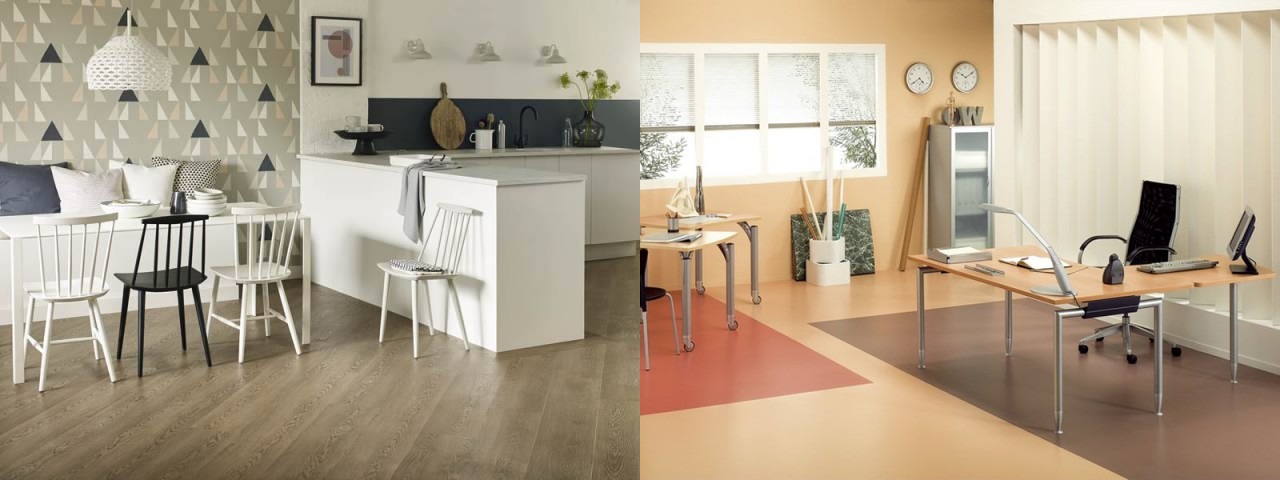
When choosing a new flooring material, it is not uncommon for people to become undecided as to whether to use vinyl or linoleum. Indeed, although the long-debated vinyl vs linoleum rivalry can cause some confusion, it is important to first say that both materials are essentially on the same wavelength. Each respective option offers essentially the same thing when it comes to aesthetic value and easy maintenance – there are, however, some key differences that should not be ignored.
Linoleum: The Original Choice
Linoleum was the original, go-to durable option when it came to projects that required resilient flooring. Patented over 160 years ago and made from linseed oil, linoleum is both an affordable and adaptable flooring option. Nowadays, it is most commonly found in schools and hospitals, and is not generally used in modern interior design projects.
Aesthetics
So, is linoleum the same as vinyl when it comes to aesthetics? Vinyl offers an almost unlimited choice of colours, design variety, and patterns due to the way in which it is printed, making it preferable over linoleum when it comes to appearance, which typically presents itself in solid block colours. The only drawback to vinyl in this regard is that it wears down over time, whereas linoleum can age without showing any significant signs of wear.
Cleaning and Care
When it comes to vinyl, it is incredibly easy to clean and maintain and can be mopped, swept, or vacuumed without the material discolouring when detergents are used on it. Similarly, linoleum is a great choice if you are looking for a surface that is easy to clean, which is why it is so often used in schools and hospitals. In other words, there is little to no difference in either material when it comes to cleaning, and they are both equally easy to maintain.
Durability
Both materials are highly durable, but due to its layered properties, vinyl has the potential wear down over time, exposing its solid core layer. Linoleum is a more durable material due to the way it is constructed but, due to it being softer than vinyl, it is susceptible to minor scratch damage. Any damage to linoleum, however, will be less evident than that of vinyl due to it not having a solid core layer which can be exposed over time.
Cost and Lifespan
Whilst vinyl is the more affordable option, a major difference between the two materials is that vinyl will last around 10-20 years before it wears down and its core is exposed. By contrast, the more expensive linoleum can last between 20-40 years (and sometimes more). The only drawback to this is that it does begin to show its age over time, however some people appreciate this aged appearance, and feel it adds to the room’s aesthetics.
Verdict
As both relatively low-cost options, vinyl and linoleum are a great way to create a floor that is both durable and easy to maintain. Vinyl, with its endless aesthetic abilities, will produce a more visually appealing room, but loses out on its relatively short lifespan. By contrast, linoleum will wear longer, and perhaps is the more favourable option when it comes down to practicality.
Whether you choose vinyl or linoleum, here at The Flooring Group, we provide a wide range of affordable commercial and residential flooring, and a professional, high quality installation service, guaranteeing an easy-to-maintain room.
Contact us today on 0207 609 1234 or visit our website to find out more.